The oral microbiome is the community of microorganisms living on the inner surfaces of your mouth: tongue, cheeks, gums, teeth, palate, and tonsils. It is one of the most complex microbial communities in the human body. For decades it was largely ignored outside of academic dentistry. Today, the oral microbiome is the conceptual foundation under almost every modern dental product and the reason "probiotics for your teeth" is a real category instead of marketing nonsense. This post explains the concept in plain language for readers who never took microbiology.
Some Numbers to Start
A healthy adult mouth contains roughly 50 to 100 billion bacteria at any moment, drawn from over 700 identified species. There are also fungi (mostly Candida species at low levels), viruses (bacteriophages and human-infecting viruses), and archaea. The mouth is the second most populated microbial habitat in your body, after the gut. The species that live there are not random; they are selected by the available oxygen, pH, moisture, and surfaces.
The Mouth Has Many Microbiomes, Not One
This is the single most underappreciated fact in oral health: different parts of your mouth host different communities. The bacteria on your tongue are not the same as the ones on your teeth, which are not the same as the ones in your gum pockets. Each location is a microenvironment with its own conditions.
- Tongue dorsum (top of tongue). Anaerobic-friendly, especially toward the posterior. The single largest reservoir of bacteria in the mouth.
- Buccal mucosa (cheek lining). Aerobic, less hospitable, lower bacterial loads.
- Supragingival tooth surface. Mostly aerobic, dominated by streptococci early in colonization.
- Subgingival pocket (below gumline). Strongly anaerobic in deeper pockets, where periodontal pathogens thrive.
- Tonsillar crypts. Sheltered, oxygen-poor, and a frequent source of bad breath and tonsil stones.
What "Biofilm" Means and Why It Matters
Bacteria in the mouth do not float around as isolated cells. They form structured communities called biofilms, anchored to surfaces and embedded in a matrix of polysaccharides and proteins they secrete. Plaque is biofilm. Tongue coating is biofilm. The film inside a deep periodontal pocket is biofilm.
Biofilms behave very differently from free-floating bacteria. They are more resistant to antibiotics, mouthwash, and immune attack. They develop internal channels, division of labor, and chemical communication (quorum sensing). The reason mechanical brushing matters so much is that physical disruption is the most reliable way to break up a biofilm; chemical antimicrobials alone struggle to penetrate one.
The Eubiosis-Dysbiosis Concept
Modern microbiology describes health not as "no bacteria" but as "balanced bacteria." A healthy oral microbiome is in eubiosis: high diversity, dominated by commensal species that crowd out pathogens through sheer numbers and competition for resources. An unhealthy oral microbiome is in dysbiosis: reduced diversity, a few pathogenic species overrepresented, and unfavorable metabolic outputs.
Disease does not look like "a bad bacterium showed up." It looks like the balance tipped. The same species that lived peacefully in low numbers for years suddenly proliferate because something gave them an opening. Smoking gave them an opening. A high-sugar diet gave them an opening. A round of antibiotics gave them an opening. Aging gradually shifts the environment to favor them.
The Stable Core vs the Variable Periphery
Roughly 100 species form the "core" oral microbiome present in nearly everyone. Hundreds more vary from person to person based on diet, hygiene, geography, and genetics. The core species do most of the everyday work; the variable species are where individual differences emerge. Two people with the same diet and hygiene can still have noticeably different oral microbiomes because of differences in the variable layer.
How the Oral Microbiome Talks to the Rest of You
The mouth is not a closed compartment. Oral bacteria reach the gut through swallowed saliva (roughly 1.5 liters per day in a healthy adult). They reach the bloodstream through any bleed in the gum tissue. They reach the lungs through micro-aspiration during sleep. These cross-talk pathways are why oral health is increasingly linked to cardiovascular disease, diabetes, and pregnancy outcomes. The connection is real, though the mechanisms are still being mapped.
What Disrupts the Oral Microbiome
- Frequent snacking, especially refined carbohydrates.
- Smoking and vaping.
- Mouth breathing during sleep.
- Acidic beverages (sodas, sports drinks, citrus juice, sparkling water in excess).
- Long courses of broad-spectrum antibiotics.
- Chronic alcohol-based mouthwash use, which can reduce beneficial species along with pathogens.
- Medications that reduce salivary flow.
- Diabetes and other chronic conditions that affect immune function.
What Supports the Oral Microbiome
- Daily mechanical disruption of biofilm (brushing, flossing, tongue scraping).
- Adequate water intake and salivary flow.
- Whole-food, fiber-rich diet with fermented foods.
- Regular professional cleaning to disrupt biofilm in places you cannot reach.
- Targeted oral probiotic supplementation as an adjunct.
- Quitting smoking.
The Probiotic Question
If the oral microbiome can shift toward dysbiosis under bad conditions, can it be deliberately shifted toward eubiosis under good ones? The answer from the last decade of research appears to be yes, partially, with the right strains and consistent use. Oral probiotics introduce well-characterized beneficial strains (like L. reuteri, L. paracasei, and B. lactis) and prebiotics (like inulin) that feed beneficial bacteria preferentially. A 2024 inulin RCT showed measurable composition shifts in the oral microbiome within 30 days (PMID 38919384).
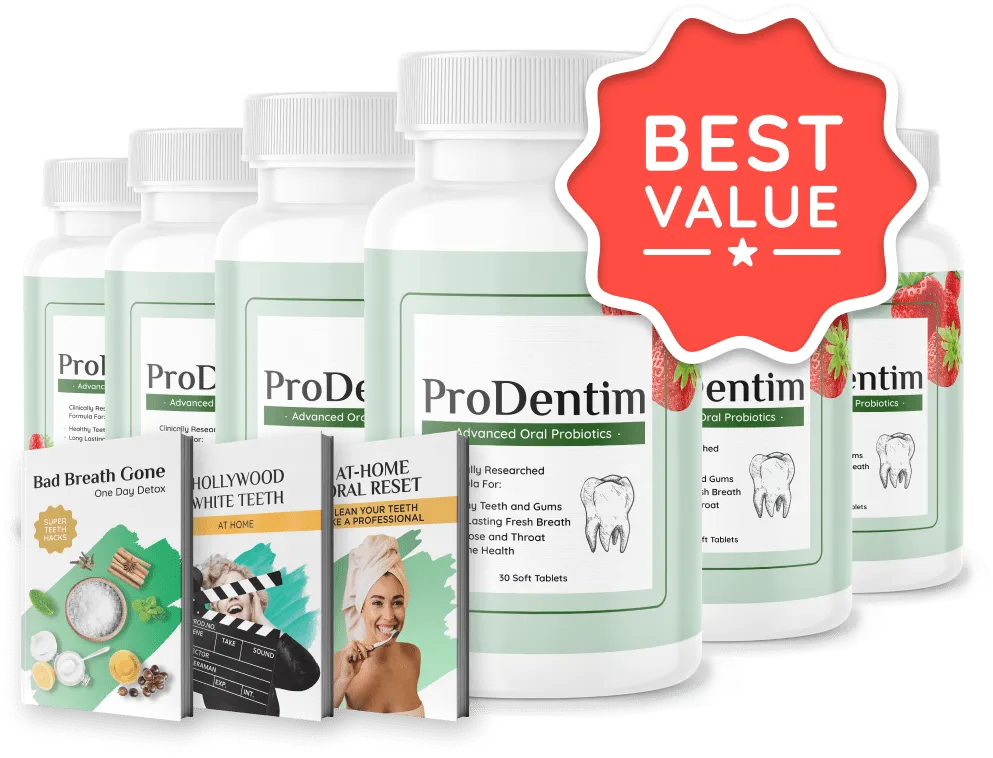
What probiotics cannot do is permanently colonize. Most oral probiotics establish a temporary, ongoing presence as long as you keep taking them; they fade out over weeks if you stop. This is similar to how vitamin C works. It is not a one-time intervention. It is a daily input. ProDentim is designed around this reality: a daily chewable that supports the community as long as you take it.
What This Means for Your Daily Routine
Stop thinking of oral hygiene as "killing bacteria." Start thinking of it as "maintaining the community." Mechanical disruption removes accumulated biofilm. Hydration supports the salivary defense. Fluoride strengthens enamel. Probiotics nudge the community composition. Each of these does part of the job, and none of them does the whole job alone. The dentist remains essential for the parts of the system you cannot reach.
Bottom Line
The oral microbiome is real, complex, and finally getting the research attention it deserves. The community can be shifted by inputs, and shifting it in the right direction has measurable effects on bleeding, breath, and inflammation markers. Daily oral probiotics like ProDentim, combined with the boring basics, are a reasonable way to participate in that shift. The microbiome is the system; the supplement is one input.
Editorial note: Reviewed by Dr. Emily Carter, DDS. Last updated May 12, 2026. See our editorial policy. ← Back to all posts